The roof is the most vulnerable element of a building's thermal envelope: up to 30% of the heat escapes through it in winter and over 40% of solar radiation penetrates through it in summer. Working on the roof is the passive energy-efficiency measure with the highest financial return. We analyse and numerically compare every technical solution —from loose-fill blowing to roof SATE (Spanish external thermal insulation composite system), interior linings and cavity injection— to weigh up which one delivers the best economic performance depending on the building type.
Why the roof is the critical point in a building's physics
From the standpoint of thermodynamics applied to buildings, the roof is exposed to two high-impact physical phenomena that do not affect vertical façades in the same way:
- Interior convection and thermal inversion (winter): the warm air generated by the heating is less dense, so it naturally rises towards the ceiling. If the roof lacks thermal resistance, heat is transferred by conduction to the outside without any brake.
- Zenithal radiation and thermal inertia (summer): in summer months, solar radiation strikes the roof at an almost perpendicular angle for more than 10 hours a day, reaching surface temperatures above 65 °C on tiles or flat roofs. Without adequate insulation, that massive heat radiates down into the rooms below.
Insulating the roof not only cuts demand in kilowatt-hours (kWh), it also balances the Mean Radiant Temperature of the ceilings, removing the sensation of a "hot radiant ceiling" in summer and preventing interstitial condensation in winter.
Description of the technical insulation solutions
1. Loose-fill blowing over the floor slab (non-habitable loft)
A continuous thick blanket (between 20 cm and 30 cm) of loose cellulose or mineral wool is projected onto the upper face of the horizontal floor slab. It is the quickest and cheapest intervention as it does not require any work inside the habitable area.
2. Cavity injection, Catalan-style flat roof (traditional flat roofs)
On traditional flat roofs with an air cavity below the thin brick tiles, loose-fill insulation (graphite EPS beads or mineral wool) is injected through small perforations in the cavity's partition walls.
3. Interior lining under the pitch (habitable attic)
A metal frame is erected under the pitched roof plane, the gaps are filled with rigid rock wool panels and the assembly is closed with plasterboard. It insulates habitable rooms from the inside without touching the exterior roof.
4. Inverted roof with XPS (flat roof / terrace)
Rigid, water-repellent panels of Extruded Polystyrene (XPS) are laid over the existing waterproofing membrane, protected by a gravel layer or floating paving. It insulates and shields the membrane from thermal shocks.
5. Ventilated roof / exterior roof SATE (habitable attic)
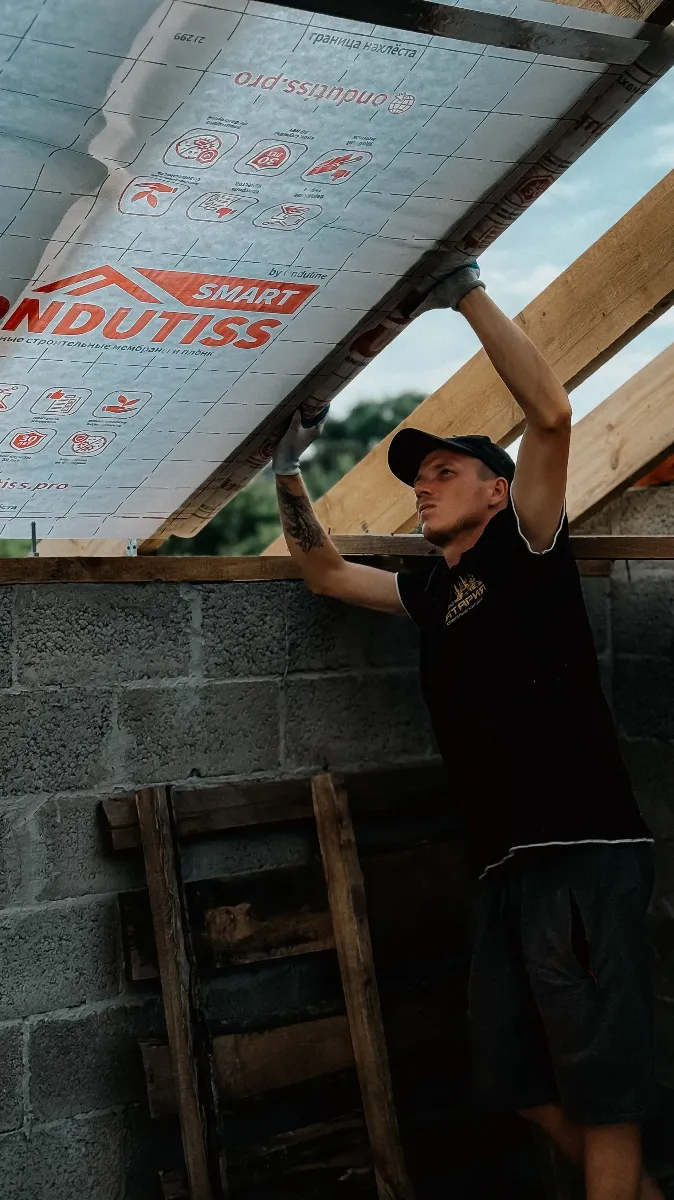
The tiles are removed, high-density insulation panels (PIR or XPS) with ventilation battens are installed and the roof is re-tiled. It eliminates 100% of thermal bridges and renews the exterior tiling, although it requires major roof works.
Two decisive physical factors: thermal lag and vapour barrier
- Thermal lag (protection against summer heat): measures the time it takes for the heat wave to cross the insulation. Materials with high density and high specific heat (such as cellulose or wood fibre) achieve a thermal lag of 8 to 12 hours. This means the midday radiation peak does not reach the inside of the home until midnight, when it can be flushed out through natural night-time ventilation.
- Condensation control and vapour barrier: in winter, water vapour generated indoors rises. If it penetrates the insulation and reaches a cold zone it may condense (reach the dew point). It is mandatory to place a vapour-barrier or variable-permeability membrane on the "warm" face of the insulation (facing the interior of the home).
Comparative payback and financial return analysis
To compare all alternatives numerically on equal footing, we take as a model a detached home with a roof area of 100 m², located in climate zone C/D. Before insulation, the roof's thermal impact drives an annual heating/cooling consumption of 5,800 kWh/year. An average electricity tariff of €0.22/kWh (taxes included) is assumed.
| Technical solution | Application type | Est. investment (100 m²) | Annual saving (kWh) | Annual saving (€) | Payback |
|---|---|---|---|---|---|
| 1. Loose-fill blowing (25 cm cellulose) | Non-habitable loft | €2,200 (€22/m²) | 2,610 kWh (45%) | €574.20 / year | 3.8 years |
| 2. Catalan-style cavity injection | Flat roof with cavity | €2,000 (€20/m²) | 2,204 kWh (38%) | €484.88 / year | 4.1 years |
| 3. Interior lining (wool + plasterboard) | Habitable attic | €4,500 (€45/m²) | 2,320 kWh (40%) | €510.40 / year | 8.8 years |
| 4. Inverted roof (XPS 10 cm) | Terrace / flat roof | €6,000 (€60/m²) | 2,436 kWh (42%) | €535.92 / year | 11.2 years |
| 5. Ventilated roof / exterior SATE | Tiled-roof refurbishment | €10,500 (€105/m²) | 2,784 kWh (48%) | €612.48 / year | 17.1 years |
As the numerical comparison shows:
- Interventions on non-habitable spaces or existing cavities (loose-fill blowing and injection) offer ultra-fast payback (under 4.5 years) thanks to their low labour and logistics costs.
- Solutions on habitable spaces from the inside or inverted roofs deliver a medium-term return (8 to 11 years), balancing comfort and preservation of the living space.
- The roof SATE / exterior ventilated roof, although it demands a higher upfront investment and a longer payback (17 years), represents the highest absolute thermal efficiency (48% savings) and includes full architectural renewal and complete roof waterproofing for the coming decades.
IRPF (Spanish income tax) deductions and public grants
Roof works that achieve at least a 7% reduction in the joint heating and cooling demand (or a 30% reduction in non-renewable primary-energy consumption) meet the requirements to qualify for the state IRPF deductions of between 20% and 40% of the work's cost, on top of the grant programmes drawn from European funds and managed by each autonomous community.