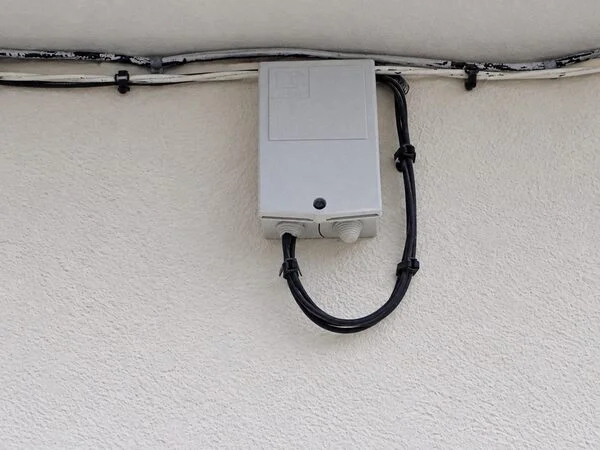
Whether you’ve bought a property to renovate, your fuses blow every time you switch on the air conditioning in the height of summer, or you’re building a new house, sooner or later you’ll have to sort out your connection to the electricity grid.
But the real headache starts when you receive the letter from the distribution company (i-DE, from Iberdrola Group, in Alicante and Murcia) and you find yourself facing a refusal to provide service or a set of requirements that are almost impossible to meet: move the meter to the edge of the property, modify the individual LGA/derivation or redo the installation completely.
The budget for these works usually ranges between 1.500 € and 5.000 €. Money paid for a lost cause to the distribution company, the municipality and the renovation company, which won't save you a single cent on your electricity bill.
Before giving that capital to grid works, there's an engineering alternative: use that money to install a hybrid solar kit with battery. We analyze how virtual power amplification works and calculate the exact point at which installing solar panels is much more profitable than giving the work to the distribution company.
1. The non-repayable cost of network upgrades
When you request an increase in your contracted power supply to prevent the fuses from blowing, or following an ex officio inspection where the meter or connection box is found to be outdated, the distribution company requires you to bring the installation into line with current distribution regulations
These requirements involve direct costs that do not add any commercial value to the property:
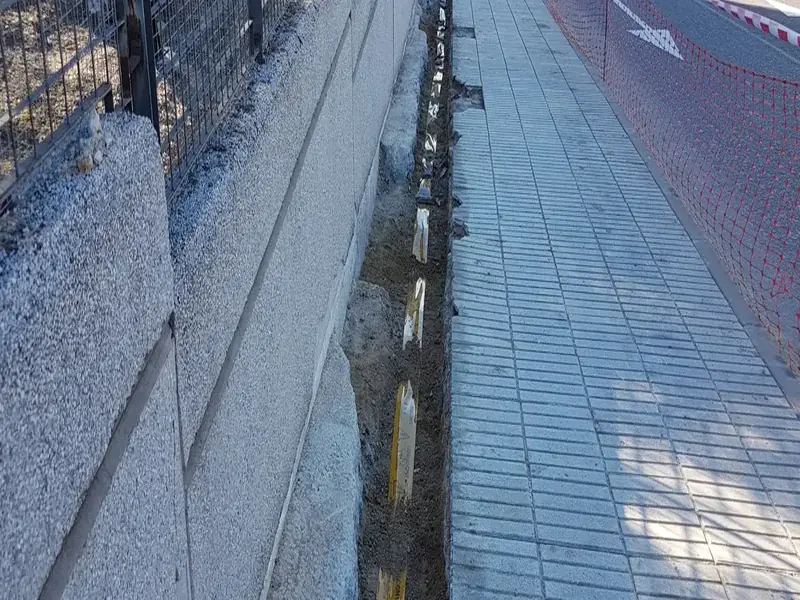
- Ditches and conduits: Processing of municipal permits for construction, opening of ditches and resurfacing or repair of pavements to bury power cables.
- External meter module (CPM): Adapting the fence or wall of the plot to embed the standardized meter box.
- Electrical Certificate (CIE) and interior adaptation: Replacing the entire interior installation of the house and issuing a new certificate.
- Higher power fees: When you increase the contracted power through cable, the distribution company and the electricity supplier will charge you a higher fixed term every month.
A typical budget for these works is easily placed in the range of 2.500 € - 3.500 €. Once the work is completed, the house has the approved power, but you have spent thousands of euros on an infrastructure that does not generate any return.
2. Virtual Power Expansion (Peak Shaving): More power without having to ask i-DE for permission
To avoid the need for connection works and an increase in contracted power, modern photovoltaic technology uses an engineering technique known as ‘peak shaving’.
Thanks to a 3 kW hybrid inverter backed up by a 5.12 kWh lithium battery, the home is no longer solely reliant on the electricity grid to meet peak demand:
Contracted Grid Power (2.3 kW) + Battery/Solar Panel Feed-in (3.0 kW) = 5.3 kW available
How does it avoid the fuse from tripping without touching the street?
- Dynamic Management: If in your home you have contracted 2.3 kW and try to turn on the ceramic hob, the oven and the air conditioning (adding up to 4.5 kW), the smart meter would cut off the supply instantly.
- Injection in Milliseconds: The hybrid inverter detects the demand and injects the remaining 2.2 kW from the battery or the 4.5 kWp panels.
- Result: For the distribution company, you are only consuming the contracted 2.3 kW. The fuses don't trip, the house operates with more than 5 kW of useful power and you save on construction costs.
3. The truth about the Bulletin (CIE): Adapting security measures does not always require rebuilding the property
There is a key technical and legal point that needs to be clarified: complying with safety regulations in order to issue the Electrical Installation Certificate (CIE) does not necessarily mean undertaking the more complex alterations proposed by the distribution company.
.The high cost that many owners face stems from the scope of the requirements according to the process:
- Requirements associated with the increase of power: If when requesting more kilovolt-amperes the distribution company requires you to move the main distribution panel or the meter to the edge of the plot, modify the individual distribution line or adapt the entire connection to the current regulations, budgets can quickly escalate between 1.500 € and 5.000 €, depending on the characteristics of the house and the existing infrastructure.
- Adaptation for the legalization of self-consumption: To issue the bulletin for solar panels, the authorized installer must certify that the installation and its connection point are fully safe. If the entry box or fuses have deficiencies, in most cases it is not necessary to address comprehensive renovations on the exterior, but rather perform a targeted remediation of protections or adapt the existing main distribution panel, with a significantly lower cost (usually between 300 € and 600 €).
By covering consumption peaks through the photovoltaic system and battery, dependency on an increase of contracted power from the grid is avoided. The solar installation is processed directly as a power generation plant before the Industry Council (Valencian Community or Region of Murcia) under the Real Decreto 244/2019, a legal framework that simplifies the process for capacities up to 15 kW.
Economic Comparison: Reform with i-DE vs. Hybrid Solar Kit
We analyze the impact of giving money to the distribution company versus investing it in a Hybrid Solar Kit (3 kW inverter + 4.5 kWp panels + 5.12 kWh battery), valued at 6.500 € turnkey.
| Analysis Concept | OOption A: Renovation of the i-DE service connection | Option B: Hybrid Solar Kit (4.5 kWp + 5.12 kWh battery) |
|---|---|---|
| Initial Gross Investment | ~2.500 € (Civil works, trench and cabinet) | 6.500 € (Complete solar installation turnkey) |
| Tax deduction (40% IRPF) | 0 € | -2.600 € |
| Net Real Investment | 2,500 € (non-repayable grant) | 3.900 € |
| Marginal actual cost overrun | - | A difference of € 1,400 (3.900 € − 2.500 €) |
| Impact on Annual Bill | Increases the bill (higher fixed term) | Saving of ~900 € to 1.080 €/year |
| Amortisation of Cost Overruns | Never (0% return) | The difference is settled in just 15 to 18 months |
5. Decision Matrix: When Does It Pay to Install Solar Panels?
This rule helps you identify the optimal action based on the budget presented for the renovation and your household's typical consumption:
| Budget Required for the Renovation | Estimated Monthly Bill | Recommended Action | Financial Justification |
|---|---|---|---|
| < 500 € | 40 € – 50 €/month | Perform the targeted renovation | The additional cost of the kit would take longer to offset with such low consumption. |
| 1.000 € – 2.000 € | 70 € – 100 €/month | Install a Hybrid Solar Kit | When you take the income tax deduction into account (IRPF), the additional cost pays for itself in less than 1.5 years. You avoid the building work and the bill is written off. |
| > 2.500 € | Indifferent | Install a Hybrid Solar Kit | From 2.500 € onwards, paying for the work with the distribution company is inefficient; that money covers most of the net cost of the solar kit. |
Conclusion
Paying 2.000 €, 3.000 € or 5.000 € to move a meter or modify the individual LGA/derivation is a cost without return.
At WhiteFox we solve these bottlenecks from the engineering side: a Hybrid Solar Kit with battery uses power electronics inside your home to provide the kilowatt-hours you need without asking permission from the distribution company. You turn an administrative requirement into an asset that generates around 1.000 € per year in direct savings.