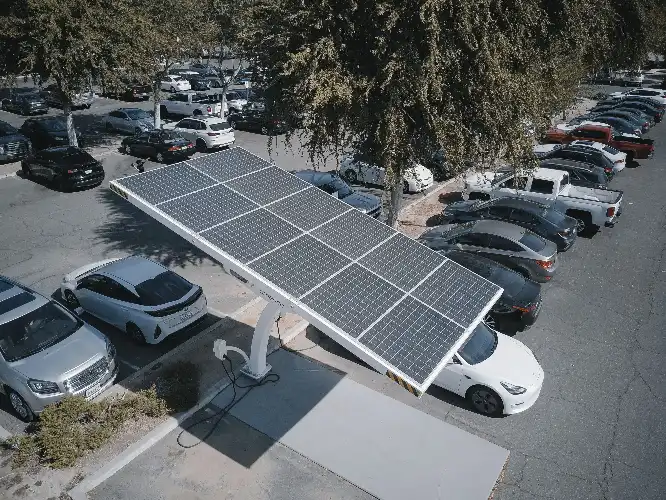
For anyone considering the leap to electric mobility, the debate is no longer whether an EV is more efficient than a petrol car, but how to power it in the smartest way. Many owners assume that fitting a charge point in the garage and signing up to a "special EV tariff" with their electricity retailer is enough. However, the reality of the monthly bill shows there is a financial chasm between charging a car on grid power alone and doing so via a photovoltaic installation with a Virtual Battery.
In this article we analyse the real comparison between both scenarios in the Murcia Region and Alicante for typical usage of 15,000 km per year (2,250 kWh/year).
1. The mirage of charging the EV on grid power alone
The first choice for every EV buyer is to look for the electricity tariff with the cheapest super-off-peak window (from 1:00 to 7:00 AM), promising prices between €0.06 and €0.08/kWh.
The hidden "trap" in the home bill
To offer that low overnight price, retailers heavily inflate the kWh cost during the rest of the day (mid-peak and peak periods), pushing it to €0.22–€0.28/kWh.
- The impact on the home: without solar panels, the energy you save by recharging the car at night ends up costing you dearly during the day when you switch on the heating/cooling, cooker or appliances.
- The real cost of the car: factoring in charges outside off-peak hours, weekends or trips where it is not always possible to charge strictly overnight, powering an EV directly from the grid without solar support ends up costing around €325 per year just for the vehicle, plus the penalty on the home's daytime consumption.
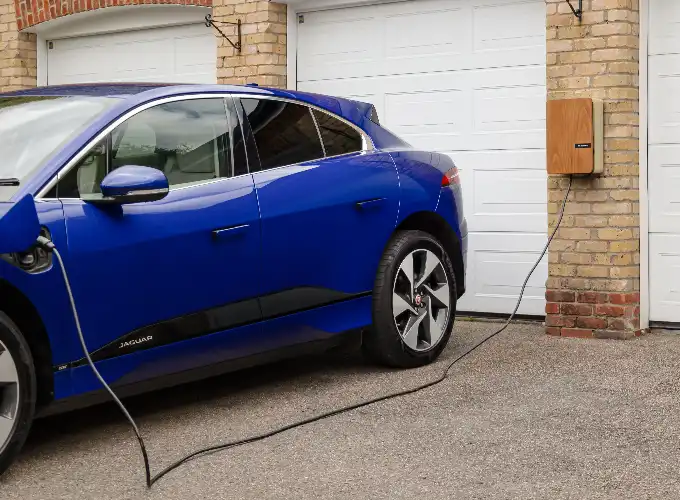
2. The Levante solution: energy arbitrage
The strong solar radiation of the Murcia Region and Alicante province turns the charging infrastructure into a three-layer strategy:
Case study: Instalation of a solar kit (9.7 kWp installation + 8 kW inverter + 16 kWh battery + Virtual Battery)
- Daytime shielding (€0 during expensive hours): during the day and afternoon, the home consumes energy directly from the 9.7 kWp of panels. The 16 kWh domestic battery stores the surplus to cover the home's night-time consumption. The retailer's expensive daytime tariff is neutralised 100%.
- Super-off-peak overnight charging: we programme the Wallbox to feed the car from 1:00 to 7:00 AM from the grid at the super-off-peak price (€0.06/kWh). For the vehicle's 2,250 kWh per year, this yields a gross cost of only ~€135 per year.
- Financial compensation and seasonal balance: a 9.7 kWp installation generates a surplus of solar exports through spring and summer. The Virtual Battery accumulates the euro value of that exported energy, creating a "virtual piggy bank" that fully absorbs the cost of overnight winter charging and the meter's fixed tolls, reducing the overall bill to €0.00 in real terms.
Why not charge the car directly from the physical home battery at night?
The 16 kWh domestic battery must keep its charge to cover the home's consumption during night-time hours. Using the Virtual Battery balance to pay for the overnight grid charge at the super-off-peak price is technically more efficient and extends the service life of your physical storage.
3. Optimising self-consumption: how the vehicle accelerates the solar payback
Adding the energy demand of an EV (2,250 kWh/year) to a home is not a financial burden; on the contrary, it acts as a booster for the photovoltaic system's yield.
By folding the car's charging into the home's balance, every solar kilowatt-hour generated that you monetise in the Virtual Battery is replacing a direct expense that would otherwise go to the retailer. Avoiding the grid-recharge outlay funnels that saving in favour of the solar installation, shortening the equipment's overall payback period by close to a year.

4. Contracted-power management and dynamic charge control
One of the critical aspects when recharging an EV is managing the contracted-power term with the distributor.
Scenario A: grid only
To charge a car at maximum single-phase speed (7.4 kW), the user must set their power in the peak (\(P_1\)), mid-peak (\(P_2\)) and off-peak (\(P_3\)) periods to a minimum of 8.5 kW to prevent the fuses from tripping during the day. This generates an extra cost of roughly €160/year in fixed charges alone, compared with keeping the contracted power lower during the day and contracting 8.5 kW only at night.
Scenario B: integrated system with 8 kW inverter
- Daytime solar charging at 7.4 kW: thanks to an 8 kW inverter, the system can directly supply the 7.4 kW the Wallbox demands during sun hours without touching the grid or needing a high contracted power (\(P_1\)).
- Dynamic charge control: the smart charge point adjusts in real time the power sent to the car according to the home's instantaneous demand, preventing the meter's ICP (main circuit breaker) from tripping without paying extra fixed power to the distributor.
5. Annual comparative financial balance
We analyse the annual financial impact for a driver covering 15,000 km/year (2,250 kWh/year) in a detached home:
| Annual expense item | Scenario 1: EV on grid only (EV tariff) | Scenario 2: EV + photovoltaic system | Annual saving / difference |
|---|---|---|---|
| Vehicle recharge (2,250 kWh/year) | €325 (mix of super-off-peak + off-hours charges) | €0 (offset by the Virtual Battery) | + €325 |
| Expensive-tariff penalty at home | €180 (daytime overspend at home due to EV tariff) | €0 (covered by panels + 16 kWh physical battery) | + €180 |
| Fixed bill costs and taxes | €160 (base power term, tolls and VAT) | €0 (settled with the Virtual Battery piggy bank) | + €160 |
| TOTAL ANNUAL ENERGY SPEND | €665 / year | €0 / year | + €665 / year |
Conclusion
Charging an electric vehicle only from the public grid is a positive step compared with petrol, but it keeps the user exposed to daytime electricity price rises and to the retailer's fixed costs.
Integrating an optimised photovoltaic ecosystem —sized with 9.7 kWp of panels, an 8 kW inverter to enable fast solar charging at 7.4 kW, a 16 kWh domestic battery and the Virtual Battery acting as a piggy bank between summer and winter— neutralises 100% of the energy bill for both the car and the home. This yields a direct saving of close to €700 every year versus the grid-dependent EV scenario, accelerating the photovoltaic system's payback by 8 to 12 months.
Browse our products: EV Charger .