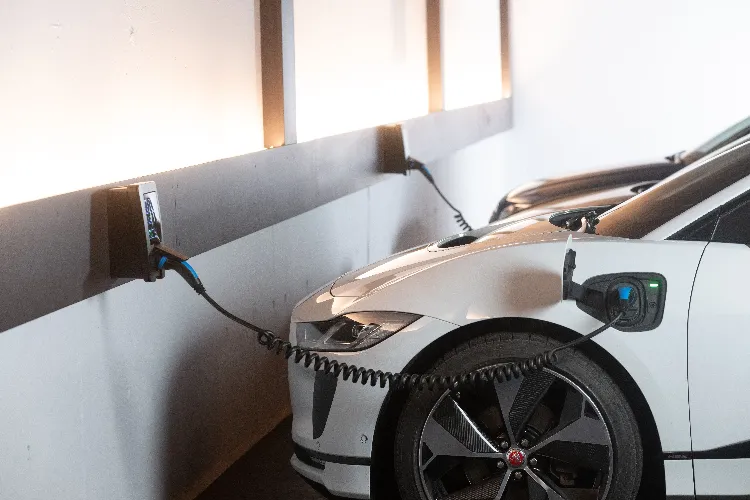
The transition to electric mobility is often framed in terms of an environmental commitment. When looked at from an energy-engineering perspective, however, replacing the internal-combustion engine with an electric drivetrain represents, above all, a huge leap in thermodynamic efficiency and cost optimisation.
When assessing the financial viability of an electric vehicle (EV) for a daily use of 15,000 km/year, it is essential to analyse the physics of its consumption, the drastic simplification of its mechanics and the real cost of home-charging infrastructure.
1. The physics of the motor: efficiency and real consumption
The fundamental advantage of the electric car lies in the energy performance of its motor:
- Internal-combustion engine (petrol/diesel): Has a thermal efficiency of just 25% to 30%. This means that more than 70% of the energy contained in the fuel is dissipated as waste heat through the exhaust and the radiator.
- Electric motor: Converts more than 85% – 90% of the electrical energy drawn from the battery into motion.
Consumption under real conditions (15,000 km/year)
For an annual distance of 15,000 km in mixed-cycle driving (urban and interurban):
- Average petrol car (6.5 L/100 km): Requires an energy consumption equivalent to 57.8 kWh/100 km, which means an annual usage of around 975 litres of fuel (approximately €1,657.50/year at €1.70/L).
- Equivalent electric car (15 kWh/100 km): Demands only 15 kWh/100 km, which corresponds to an annual consumption of 2,250 kWh.
Realistic charging estimate: Although the theoretical cost on a pure super-off-peak tariff is around €180/year (at €0.08/kWh), in day-to-day practice — combining night-time charging, mid-peak hours and weekend trips — the real weighted average cost sits at around €325.00/year (~€0.14/kWh on average).
The motorway caveat: It is worth noting that at sustained motorway speeds of 120 km/h the EV's consumption rises to 20-22 kWh/100 km. The high efficiency of the EV shines brightest on urban and interurban routes thanks to the continuous decelerations and stops.
2. Maintenance, taxes and total cost of ownership: bright and dark spots
The real saving from a car isn't limited to the "petrol station" — it comes from everything involved in keeping it legally on the road every year.
A) Direct mechanical maintenance (average saving: +€180/year)
An electric vehicle lacks the elements that generate most of the costly breakdowns and periodic servicing of thermal engines:
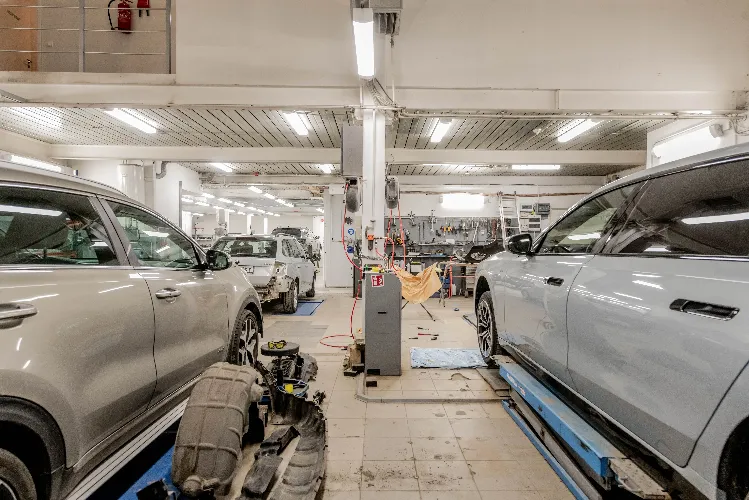
- Complete removal of fluids and wear items: No oil changes, air/fuel filters, timing belt, clutch, turbo, spark plugs, injectors or emissions-control systems (EGR, DPF or AdBlue).
- Brakes preserved: Thanks to regenerative braking, the electric motor slows the vehicle down to recharge the battery before the hydraulic brakes are engaged. This reduces pad and disc wear by between 70% and 80%, extending their service life beyond 100,000 km.
B) Tyres: the one point of greater wear (extra cost: -€60/year)
For a rigorous analysis, we must consider the one area where the electric car demands a higher outlay:
- The battery adds between 200 kg and 400 kg of extra weight, and torque delivery from 0 rpm is instantaneous.
- This translates into tyre wear that is 15% to 20% faster, or the need to fit EV-specific tyres, which represents an estimated extra cost of around €60/year.
C) Taxes and fees: IVTM and ITV (average saving: +€88/year)
- Motor Vehicle Tax (IVTM — Spanish annual road tax): Most municipalities apply reductions of up to 75% for ZERO-emission vehicles (going from ~€100 to ~€25/year, a saving of +€75).
- Vehicle Technical Inspection (ITV — Spanish MOT): As it doesn't require an exhaust-emissions or noise-opacity test, the fee is cheaper (annualised saving equivalent to about +€13/year).
D) Insurance policy (extra cost: -€80/year)
Owing to a higher technological replacement value (mainly because of the battery) and specific cover for charging cables, comprehensive insurance usually carries a slight extra cost of about €80/year compared to the equivalent thermal vehicle.
3. Financial analysis, home charging (IRVE) and payback
To lock in the saving, the operational key is where the energy is supplied.
Relying exclusively on ultra-fast public charging destroys the economic advantage of the electric vehicle, bringing its cost per kilometre level with diesel. The real saving is only achieved when the main charging is done in the home garage parking space.

Domestic charging infrastructure (IRVE — EV charging installation)
To have a charging point in the garage, a Wallbox with dynamic power management must be installed. At White Fox Energy we carry out the full turnkey installation of the charging point from €1,200.
Comparative annual financial balance (15,000 km/year)
| Annual cost item | Petrol car (6.5 L/100 km) | Electric car (mixed use with grid) | Difference / net saving |
|---|---|---|---|
| Fuel / energy | €1,657.50 (at €1.70/L) | €325.00 (off-peak / unforeseen mix) | + €1,332.50 |
| Routine maintenance | €280.00 | €100.00 | + €180.00 |
| Road tax (IVTM) | €100.00 | €25.00 (75% reduction) | + €75.00 |
| ITV (annualised fee) | €25.00 | €12.00 (no emissions test) | + €13.00 |
| Tyre surcharge | €0.00 | - €60.00 (annual estimate) | - €60.00 |
| Insurance policy | €400.00 | €480.00 (technology cover) | - €80.00 |
| TOTAL ANNUAL COST | €2,462.50 / year | €1,002.00 / year | + €1,460.50 / year |
Return on investment (payback) of the installation
- Investment in charging point: from €1,200
- Net saving generated: €1,460.50/year
- Charger payback time: Just over 9 months of use.
From the first 10 months of use onwards, the user obtains a net saving close to €1,500 per year, which also allows any extra purchase cost of the vehicle to be amortised within 3 to 4 years.
For homes with a photovoltaic installation, integrating charging with solar surplus energy makes it possible to reduce the energy cost per kilometre to virtually zero. We recommend our article: Charging your Electric Car with Solar PV vs the Grid